

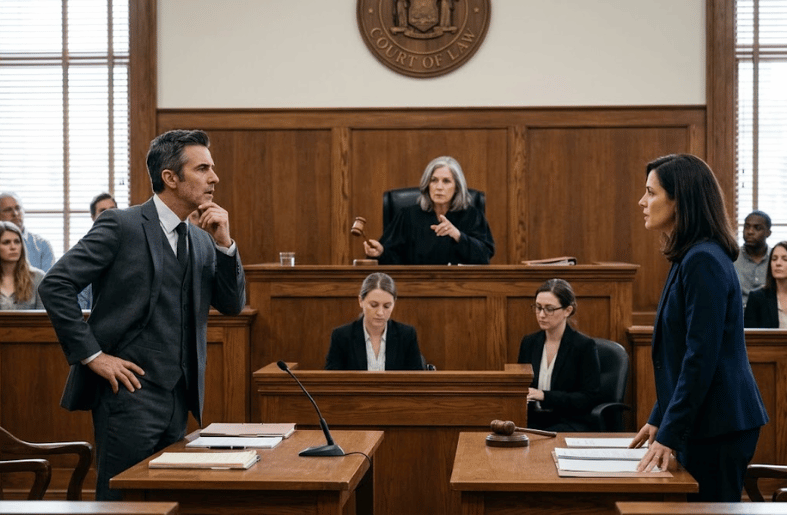
If you hear “sustained” or “overruled” in court, the judge is usually ruling on an objection. Sustained means the judge agrees with the objection. Overruled means the judge rejects it and generally allows the challenged question or evidence to proceed. These rulings can determine what testimony or evidence the jury considers.
Sustained vs Overruled at a Glance
| Courtroom ruling | What it means | What usually happens next |
|---|---|---|
| Sustained | The judge agrees with the objection | The question or evidence is stopped or limited |
| Overruled | The judge rejects the objection | The question, testimony, or evidence may continue |
| Motion to strike | A party asks to remove testimony from consideration | The judge decides whether it should be disregarded |
| Objection | A party challenges a question, testimony, or evidence | The judge makes a ruling |
Direct answer: Sustained means the judge accepts an objection and usually stops the challenged question or evidence. Overruled means the judge rejects that objection. The questioning can usually continue after an overruled objection. Neither ruling determines who ultimately wins the lawsuit or criminal case.
What Does an Objection Mean in Court?
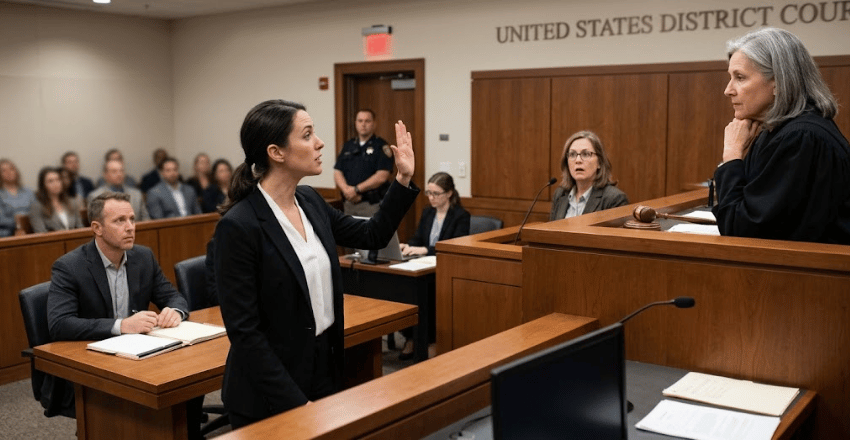
An objection is a formal challenge during a legal proceeding. A lawyer usually objects because they believe a question, answer, or evidence violates an applicable rule. The judge then decides how the proceeding should continue.
Objections often happen quickly during witness testimony. The attorney may state both the objection and its legal basis. The judge can then accept or reject that challenge.
In U.S. federal courts, the Federal Rules of Evidence govern many evidentiary questions. State courts have their own evidence rules and procedures. Exact requirements can therefore differ between jurisdictions and proceedings.
What Does Sustained Mean in Court?
When a judge says “sustained,” the judge agrees with the objection being made. The challenged question or evidence generally cannot continue in its current form. The lawyer asking the question may need to rephrase it or change subjects.
Suppose an attorney asks a witness a question that violates an evidence rule. Opposing counsel objects before the witness answers. If the judge sustains the objection, the witness normally should not answer that question.
A sustained ruling does not always end the subject completely. The attorney may correct the problem and ask a permissible question. Evidence may also become admissible later if the required legal foundation is established.
What if the Witness Already Answered?
Sometimes a witness answers before the judge can rule. A lawyer may then ask the court to strike the answer. If granted, the court may instruct jurors not to consider that testimony.
This distinction matters because hearing information is different from legally considering it as evidence. Courts use instructions to tell jurors how they must treat excluded material. The precise response depends on the circumstances and applicable rules.
What Does Overruled Mean in Court?
When a judge says “overruled,” the judge rejects the objection. The challenged question can generally remain, or the disputed evidence may be admitted. If the witness was waiting to answer, questioning normally resumes.
An overruled objection does not necessarily mean the objection was frivolous. Evidence rules can require judges to make close decisions based on context. Lawyers may disagree reasonably about how a rule applies to particular testimony.
The ruling also does not establish that the challenged evidence is true. It addresses whether the evidence or question may proceed under the applicable rules. Determining credibility and factual weight is a separate matter.
Sustained vs Overruled: The Key Differences
The easiest way to remember the distinction is to focus on the objection itself. A sustained ruling accepts the objection. An overruled ruling rejects it.
| Issue | Sustained | Overruled |
|---|---|---|
| Judge agrees with objection? | Yes | No |
| Can the original question proceed? | Usually no | Usually yes |
| Can the witness answer? | Usually not as asked | Usually yes |
| Can challenged evidence be admitted? | It may be excluded | It may be admitted |
| Can the lawyer rephrase? | Often | Usually unnecessary |
| Does it decide the entire case? | No | No |
These rulings concern specific courtroom issues rather than the final outcome. One side can receive several favorable objection rulings and still lose the case. A ruling should therefore be understood within the issue the judge was deciding.
Common Reasons Lawyers Object
Courtroom objections can involve many different evidence and procedure rules. Their availability and exact requirements depend on the court and situation. Still, several objection terms appear frequently in U.S. trials.
Common examples include:
- Hearsay: A party argues that an out-of-court statement is being offered improperly.
- Relevance: A party argues that the information does not sufficiently relate to an issue in the case.
- Leading: A lawyer objects that a question improperly suggests its desired answer.
- Speculation: A question asks a witness to guess rather than testify from adequate knowledge.
- Asked and answered: A lawyer argues that the same question has already received an answer.
- Argumentative: A question may improperly argue with the witness instead of seeking testimony.
Hearing one of these terms does not tell you how the judge must rule. Evidence rules contain qualifications, exceptions, and context-dependent standards. The same general objection can succeed in one situation and fail in another.
A Simple Courtroom Example
Imagine a witness is describing what they personally observed after a car accident, where questions of proximate cause can also arise. An attorney asks about something another person allegedly said afterward. Opposing counsel objects on hearsay.
If the judge says “sustained,” the original question cannot proceed as asked. The attorney may rephrase the question or offer another basis to admit the information. The attorney could also move to another topic.
If the judge says “overruled,” the witness may generally answer the challenged question. That could happen because the judge finds the particular statement admissible under the governing rules. The ruling concerns admissibility, not whether the statement is accurate.
Does Sustained Mean the Lawyer Won?
A lawyer whose objection is sustained succeeded on that particular objection. That does not mean the lawyer has won the trial. Court cases can involve hundreds of evidentiary and procedural decisions, including settlements made without prejudice that never reach a jury.
The same caution applies when an objection is overruled. Losing one objection does not mean the attorney has lost the case. It means the judge rejected that particular challenge at that moment.
This distinction helps when watching trials or reading court transcripts. Individual rulings control pieces of the proceeding. Verdicts and judgments decide much larger questions.
Why Objections Can Matter on Appeal
Objections can matter beyond the immediate trial. Under Federal Rule of Evidence 103, preserving certain evidentiary errors generally requires a timely objection or motion to strike. The specific ground also generally must be stated unless it is apparent from context.
That requirement gives the trial court an opportunity to address the alleged problem. It also creates a record that an appellate court can later examine. State rules may impose their own preservation requirements.
An appellate challenge involves more than showing that an objection was overruled. Applicable standards can include preservation, the nature of the alleged error, and its effect on substantial rights. Anyone dealing with an actual appeal should seek advice about the governing jurisdiction.
Does Overruled Have Another Legal Meaning?
Yes. “Overruled” can mean something different when courts discuss earlier judicial decisions. An appellate court may overrule precedent rather than overrule a trial objection.
In that context, the court rejects a legal rule established by an earlier decision. The older precedent may no longer control future cases within the relevant jurisdiction. This usage is distinct from a judge rejecting an objection during testimony.
Context normally makes the difference clear. “Objection overruled” refers to a challenge in court. A statement that one case “overruled” another concerns precedent.
How to Remember Sustained and Overruled
Think about whether the objection survives the judge’s ruling. If it is sustained, the objection stands and usually stops the challenged material. If it is overruled, the objection does not stop the proceeding.
You can also remember the pair as “stop” and “continue.” Sustained usually means the challenged action stops or is corrected. Overruled usually means the challenged action can continue.
That shortcut is useful when following a trial quickly. Still, real evidentiary rulings can have additional consequences. A judge may give instructions, limit evidence, require a foundation, or address another related issue.
What These Rulings Do Not Tell You
Neither ruling indicates which party the judge favors. Judges make evidentiary decisions throughout trials involving both sides. Those decisions apply legal and procedural rules to specific disputes.
A ruling also does not automatically determine whether testimony is believable. Admissibility and credibility are different questions. Evidence can be admitted and still be disputed or unpersuasive.
Likewise, excluded material is not necessarily false. Evidence can be excluded for procedural or evidentiary reasons unrelated to truthfulness. That distinction prevents readers from drawing too much from a single objection.
Frequently Asked Questions About Sustained vs Overruled
What does sustained vs overruled mean in simple terms?
Sustained means the judge agrees with an objection. Overruled means the judge disagrees with that objection. The first usually stops the challenged question, while the second generally lets it continue.
What happens after a judge says sustained?
The witness normally should not answer the challenged question as originally asked. The attorney may rephrase it, establish a required foundation, or move to another subject. If an answer has already been given, the attorney may request additional steps.
What happens after an objection is overruled?
The challenged question or evidence can generally proceed. A waiting witness may answer the question. The ruling may also become relevant later if a party properly preserved an evidentiary issue.
Can a judge change an evidentiary ruling?
Circumstances can change as a trial develops. A court may revisit some evidentiary issues when new facts or context emerge. The applicable procedure depends on the ruling and jurisdiction.
Is sustained good or bad?
It depends on which party you are considering. A sustained objection favors the objection on that specific issue. It does not establish that either party is winning the overall case.
Does overruled mean the evidence is true?
No. An overruled objection generally means the specific challenge did not prevent the evidence or question from proceeding. The fact-finder can still decide how much credibility or weight the evidence deserves.
The Bottom Line
The difference is straightforward once you focus on the objection. Sustained means the judge agrees with the objection, while overruled means the judge rejects it. Those decisions usually determine whether a particular question, answer, or piece of evidence can proceed.
The surrounding rules can become much more complicated in an actual case. Federal and state courts can apply different evidence and procedural requirements. For a real legal dispute, use the applicable court rules and qualified legal counsel rather than relying on general definitions alone.
—–
