

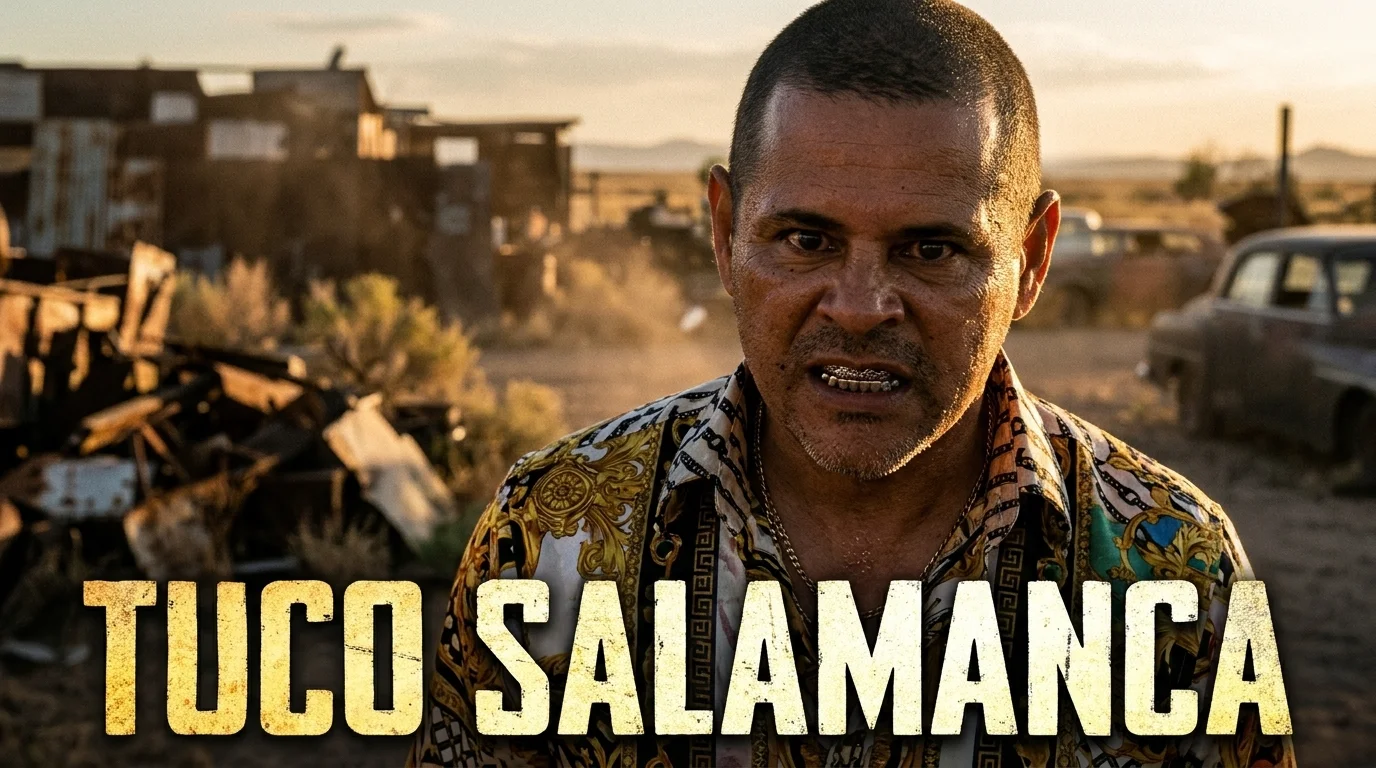
Tuco Salamanca is one of the first major criminals Walter White encounters in Breaking Bad. Raymond Cruz plays the explosive cartel distributor with an unpredictable mix of confidence, violence, and loyalty. His limited screen time still changes Walter and Jesse Pinkman’s path through Albuquerque’s criminal world.
The character also appears earlier in Better Call Saul’s timeline. That series shows a younger version who already commands fear but has not reached his later instability. Together, both shows make Tuco an important link in the wider Salamanca family story.
Direct answer: Tuco is a violent Salamanca cartel distributor played by Raymond Cruz in Breaking Bad and Better Call Saul. He becomes Walter White and Jesse Pinkman’s early drug distributor before Hank Schrader kills him. His relatives include Hector, Lalo, Marco, and Leonel Salamanca.
Tuco at a Glance
| Detail | Answer |
|---|---|
| Character | Tuco Salamanca |
| Actor | Raymond Cruz |
| Franchise | Breaking Bad and Better Call Saul |
| Role | Cartel distributor and Salamanca family member |
| Main territory | Albuquerque, New Mexico |
| Uncle | Hector Salamanca |
| Cousins | Lalo, Marco, Leonel, and Joaquin |
| Associates | Nacho Varga, Gonzo, No-Doze |
| Walter White connection | Early meth distributor |
| Fate | Killed during a gunfight with Hank Schrader |
| First Breaking Bad appearance | “Crazy Handful of Nothin’” |
| First Better Call Saul appearance | “Uno” |
Key Takeaways
- Raymond Cruz portrays Tuco in both television series.
- He becomes an early distributor for Walter White and Jesse Pinkman.
- Hector Salamanca is his uncle and a major influence on his worldview.
- His violent behavior makes him dangerous even to his own associates.
- Hank Schrader kills him during a shootout.
- Production constraints shortened his original Breaking Bad storyline.
- His departure made room for Gustavo Fring as a different kind of antagonist.
Who Is Tuco Salamanca in Breaking Bad?
Tuco enters Breaking Bad when Jesse needs someone who can distribute larger amounts of meth. Skinny Pete provides the connection after describing him as an established figure in Albuquerque’s drug trade. Jesse quickly discovers that the opportunity comes with extreme personal danger.
The first meeting becomes disastrous after Tuco takes the meth and assaults Jesse. Walter responds by visiting the distributor himself while adopting his Heisenberg identity. That confrontation becomes an important early test of Walter’s growing willingness to use intimidation.
Tuco eventually agrees to conduct business with Walter and Jesse because their product impresses him. Yet any potential partnership becomes unstable because he reacts violently to perceived disrespect. His behavior makes ordinary negotiations impossible and keeps both men under constant pressure.
That volatility separates him from many later Breaking Bad antagonists. Gus Fring operates through planning, restraint, and a professional public image. Tuco operates through emotion, intimidation, and immediate reactions.
Why Is Tuco So Dangerous?
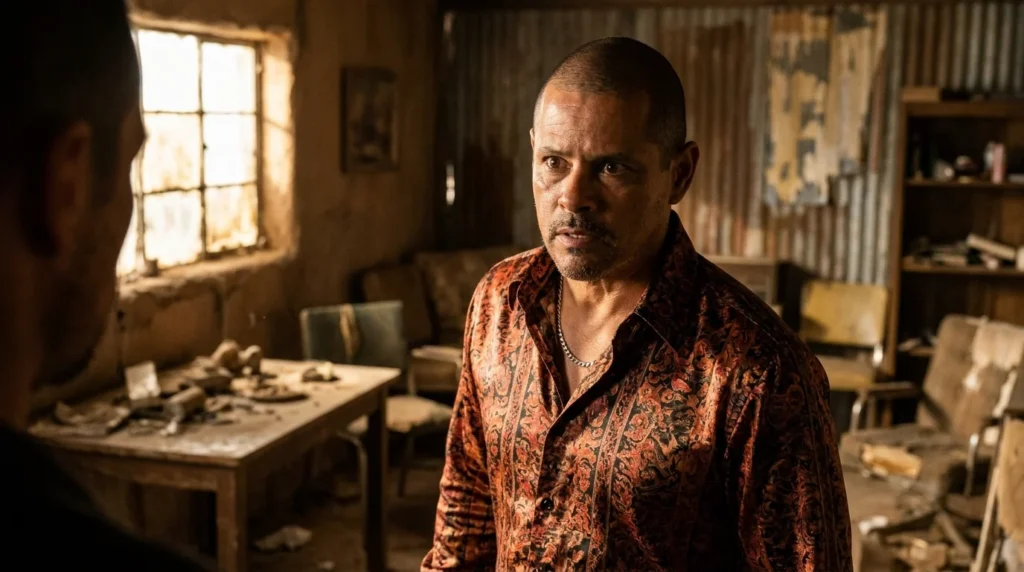
Physical violence is only part of the threat he creates. His real danger comes from his lack of predictable limits during ordinary conversations. A small comment can suddenly become a reason for punishment.
His treatment of No-Doze provides the clearest example. After a minor remark, Tuco attacks his own associate so severely that the man dies. Walter and Jesse immediately understand that being valuable business partners will not keep them safe.
Meth use further increases his instability throughout Breaking Bad. Raymond Cruz has described the character as emotionally unrestrained and physically demanding to perform. AMC also reported Cruz describing the performance as exhausting because of its relentless energy.
Cruz approached the role without simply treating the character as a conventional villain. He explained that he saw Tuco as someone defending what matters in his own distorted moral system. That approach helps explain why the character can show loyalty toward relatives while remaining brutally violent.
Tuco in Better Call Saul
Better Call Saul introduces him years before Walter White becomes Heisenberg. Jimmy McGill encounters him after two skateboard scammers accidentally target his grandmother. The mistake places Jimmy and the scammers in immediate danger.
The desert confrontation already shows the temper viewers recognize from Breaking Bad. Jimmy survives by talking his way toward a less deadly outcome. The scene also demonstrates that reasoning with Tuco is possible under limited circumstances.
Nacho Varga becomes especially important during this earlier period. Unlike his boss, Nacho tends to calculate consequences before acting. His growing concern about Tuco’s behavior eventually creates conflict that affects both Nacho and Mike Ehrmantraut.
The prequel therefore gives viewers more than another appearance by a familiar villain. It shows how different criminal personalities operated around the Salamanca organization. That context makes later developments in Breaking Bad easier to understand.
Readers interested in other detailed fictional-character explainers can also read Newsprest’s guide to Deku’s dad. Another recent breakdown examines how Kuina died in One Piece. Both articles separate confirmed story facts from popular fan assumptions.
The Salamanca Family Connection
Family is central to the Salamanca organization. Hector Salamanca is Tuco’s uncle and one of the older figures who shapes the family’s criminal identity. His influence extends to several relatives who later become important enemies.
Marco and Leonel are the silent twin assassins often called the Cousins. They seek revenge after their relative’s death and eventually target Hank. Their approach is controlled and methodical, unlike Tuco’s emotional aggression.
Lalo Salamanca presents another variation on the same family legacy. He can appear friendly, relaxed, and socially skilled while remaining exceptionally dangerous. Better Call Saul uses those contrasts to make each Salamanca threatening in a different way.
The shared family connection also explains why one character’s death can affect events much later. Violence against a Salamanca rarely stays isolated. Revenge and loyalty repeatedly drive decisions across both television series.
How Does Tuco Die?
His final Breaking Bad storyline begins after Walter and Jesse realize their distributor has become too dangerous. Tuco kidnaps them and takes them to a remote location where Hector is staying. He intends to move the operation toward Mexico.
Walter and Jesse attempt to poison him, but their plan does not work as expected. A struggle follows, and Jesse eventually shoots him during their escape. Tuco survives the immediate confrontation and remains armed.
Hank Schrader arrives while searching for Jesse and unexpectedly encounters the wounded dealer. The two men exchange gunfire outside the property. Hank ultimately shoots and kills him.
The encounter becomes significant for Hank and Walter. Hank receives praise for eliminating a dangerous criminal, but the violence contributes to later psychological strain. Breaking Bad increasingly shows that law-enforcement victories can come at a personal cost.
Why Did Raymond Cruz Leave the Role So Early?
The short storyline was not simply the original creative plan. Producer Peter Gould later explained that the writers expected the character to remain important through much more of season two. Raymond Cruz already had a commitment to TNT’s The Closer.
That scheduling issue forced the production team to restructure its plans. Gould told Fresh Air that securing Cruz even for the final episode required major scheduling adjustments. The production shot parts of that season out of sequence.
Cruz has also discussed how physically and emotionally demanding the role felt. He described the performance as extremely high-energy during interviews surrounding Better Call Saul. Returning to the character required recreating that same intense rhythm.
The result became one of television’s interesting cases where production limits influenced the story. A planned longer-running villain disappeared much earlier than expected. That change eventually made room for a radically different criminal opponent.
How Tuco’s Exit Helped Shape Gus Fring
Vince Gilligan has explained that the writers developed Gustavo Fring partly after losing their original antagonist sooner than planned. Gus was designed as a strong contrast, not just another version of the same personality. The difference became fundamental to the series.
Tuco creates fear because nobody knows when he will explode. Gus creates fear because almost everything appears controlled. His calm voice and respectable business image hide an organized criminal operation.
That contrast helps Breaking Bad avoid repeating the same villain structure. Walter first learns to survive chaos and intimidation. Later, he faces an opponent who often thinks several moves ahead.
That production necessity produced a major creative benefit. Losing one antagonist pushed the writers toward another character with a different presence. Gus eventually became one of the franchise’s defining figures.
Why the Character Remains Memorable
Screen time does not always determine a television character’s impact. Tuco appears relatively early, yet several scenes immediately establish the danger surrounding Walter’s new business. Viewers understand that the meth trade involves threats Walter cannot fully control.
Raymond Cruz’s performance gives those scenes much of their tension. His body language can shift from relaxed to aggressive with little warning. That rapid shift makes ordinary dialogue feel unsafe.
The character also arrives at the right point in Walter’s transformation. Walter has begun taking larger risks but still lacks experience inside organized drug distribution. Facing a volatile cartel figure forces him to improvise under genuine danger.
His legacy extends through the people left behind. Hector, the Cousins, and other cartel figures keep the Salamanca name central after his death. The original character therefore remains connected to conflicts that continue for several seasons.
For more television, celebrity, film, and popular-culture coverage, readers can browse the Newsprest entertainment section. The site also covers real entertainment figures and unusual cultural connections, including Serena Williams and Barbra Streisand.
Frequently Asked Questions About Tuco Salamanca
Who plays Tuco Salamanca?
Raymond Cruz plays the character in both Breaking Bad and Better Call Saul. Cruz has worked across television and film for decades. His credits also include The Closer, Major Crimes, Training Day, and other productions.
Is Tuco related to Hector Salamanca?
Yes, Hector is his uncle within the franchise. Their relationship reflects the Salamanca family’s strong emphasis on loyalty. Hector also influences the broader criminal culture younger family members follow.
Is Lalo Tuco’s brother?
No, Lalo is generally identified as his cousin, not his brother. Both belong to the same extended Salamanca crime family. Their personalities differ sharply despite their shared criminal background.
Who kills Tuco in Breaking Bad?
Hank Schrader kills him during a gunfight after unexpectedly finding him at a remote property. Walter and Jesse had already escaped after their own violent confrontation. Hank arrives while following clues connected with Jesse.
Why was the character killed so early?
The writers initially expected to use him for longer. Raymond Cruz’s commitment to The Closer limited his availability during production. Peter Gould later explained that the writers had to restructure the planned season.
Does Tuco appear in Better Call Saul?
Yes, he appears during the prequel timeline. Those episodes show his relationships with Jimmy McGill, Nacho Varga, and other characters. They also reveal an earlier stage of his criminal life.
Final Takeaway
Tuco’s importance goes far beyond the number of episodes in which he appears. He gives Walter and Jesse their first close experience with a powerful, unpredictable distributor. That experience shows how dangerous their expanding meth business has become.
His early departure also changes the direction of Breaking Bad itself. The writers eventually introduce Gus Fring as a controlled contrast to the earlier threat. That shift helps the series move from street-level chaos toward a larger criminal organization.
For viewers revisiting the franchise, the character remains an essential part of its early identity. His family connections continue shaping events long after his death. Few short-lived television antagonists leave such a clear mark on everything that follows.
