

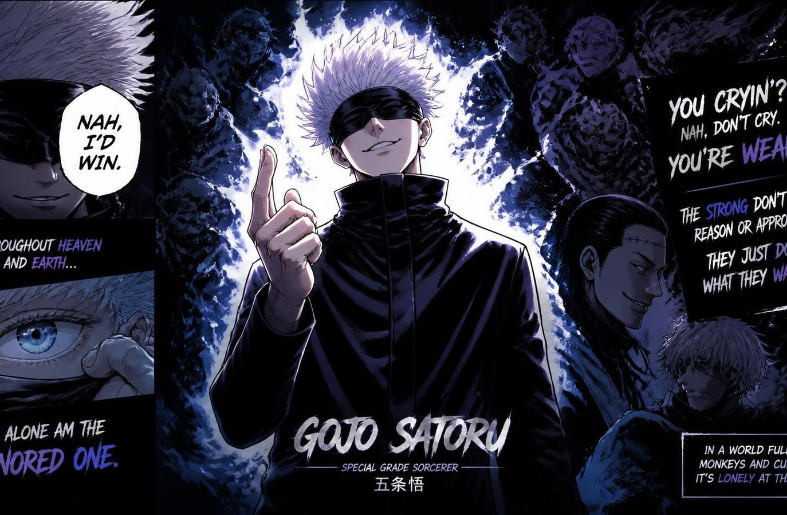
The best Gojo quotes capture much more than confidence or overwhelming power. They reveal a teacher who jokes constantly, challenges authority, and carries responsibilities few people can understand. His memorable dialogue also helps explain why Satoru became one of Jujutsu Kaisen’s defining characters.
His most memorable lines combine confidence, humor, isolation, and concern for his students. Some became famous because they sound fearless. Others matter because they reveal how strength shaped his identity, friendships, and belief that younger sorcerers could change the jujutsu system.
| Quick fact | Details |
|---|---|
| Character | Satoru Gojo |
| Series | Jujutsu Kaisen |
| Role | Teacher and special-grade jujutsu sorcerer |
| School | Tokyo Jujutsu High |
| Signature abilities | Limitless, Six Eyes, Infinity, Unlimited Void |
| Famous short line | “Nah, I’d win.” |
| Major themes | Strength, isolation, teaching, reform, confidence |
| Translation note | English wording can differ between manga, subtitles, and dubbed versions |
Best Gojo Quotes and What They Reveal About His Character
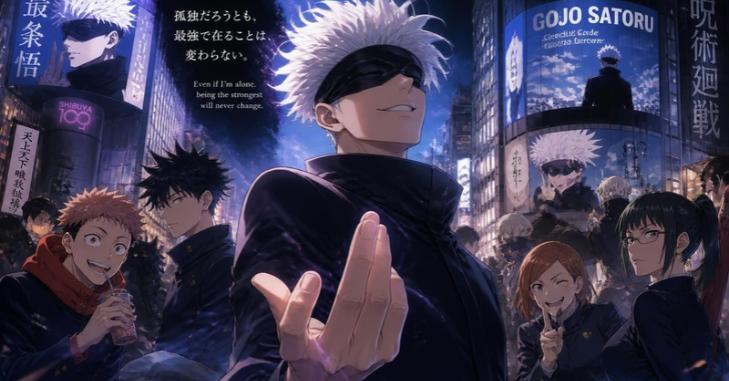
Several famous lines are remembered because they sound effortlessly confident. Yet their meaning changes when you consider the scene and the person hearing them. The strongest examples reveal both his public swagger and his private burden.
1. “Don’t worry. I’m the strongest.”
This short reassurance may be the clearest summary of his public personality. He treats extraordinary danger as something other people should not fear around him. The confidence sounds arrogant, but it also gives frightened students permission to trust him.
That combination makes the line more meaningful than a simple boast. Strength becomes a responsibility because other people depend on his ability to deliver. His confidence therefore works as protection as much as self-praise.
2. “Nah, I’d win.”
Few anime lines became memes as quickly as this compact declaration. Its appeal comes from how casually Satoru treats an almost unimaginable challenge. He does not give a detailed argument because absolute confidence is the entire point.
The line also gains weight from the larger story surrounding the confrontation. Readers know strength has always defined how others see him. That history makes three casual words feel like a statement about his entire identity.
3. The “honored one” declaration
One of his most recognizable moments comes during the Hidden Inventory storyline. After surviving a battle that nearly kills him, he experiences a dramatic breakthrough in his abilities. His declaration presents that transformation as almost spiritual self-realization.
The scene matters because his personality changes alongside his power. He no longer behaves like a gifted student learning his limits. He suddenly understands how far those limits extend beyond nearly everyone else.
The Hidden Inventory arc provides useful context for this period. The arc explores his school years and friendship with Suguru Geto. It also shows events that eventually send the two characters toward very different lives.
4. His warning about dying to win
Satoru gives Megumi an important lesson about the difference between accepting death and risking death. The distinction challenges Megumi’s habit of treating self-sacrifice as his easiest answer. He wants the younger sorcerer to imagine victory rather than merely respectable defeat.
That advice exposes the teacher behind the playful personality. He understands that talent alone does not create a powerful fighter. Mindset, ambition, and a willingness to value your own survival also matter.
5. His belief in education
Some of his most revealing dialogue concerns changing the jujutsu establishment. He knows raw force could remove individual leaders without repairing the structure beneath them. His alternative is to teach capable young people who can eventually change that structure themselves.
This choice gives his role at Tokyo Jujutsu High greater importance. Teaching is not a side job for someone already powerful. It is his long-term answer to a system he believes has failed younger sorcerers.
Readers interested in more character-focused entertainment coverage can browse Newsprest’s Entertainment section. The site also covers other long-running series and pop-culture questions. That makes character explainers a natural fit beside its broader entertainment reporting.
Why His Funniest Lines Matter
Humor is one of the character’s most effective defenses. He can joke during dangerous situations that would terrify almost anyone else. Those jokes reinforce his confidence while making enemies struggle to read his emotional state.
They also help him connect with students who could otherwise find him intimidating. He is powerful enough to feel almost unreachable. Acting silly gives younger characters a way to interact with him as a teacher rather than a distant legend.
The comedy can disappear quickly when circumstances become serious. That contrast makes his quieter moments feel sharper. Viewers notice immediately when the person who normally jokes stops treating a situation lightly.
Strength Is Also His Greatest Source of Isolation
Power gives Satoru extraordinary freedom, but it does not give him an equal partner. Few characters can understand the responsibilities created by being stronger than nearly everyone around you. That imbalance shapes his relationships throughout the story.
His friendship with Suguru Geto becomes especially important for that reason. During their school years, they could speak as teammates rather than teacher and student. Their eventual separation therefore represents more than a friendship ending.
The official anime identifies Satoru as one of the major Jujutsu Kaisen characters. The series presents the Hidden Inventory arc as the story that explores his younger years.
Strength consequently becomes both freedom and distance. He can protect almost anyone during ordinary circumstances. Yet his power cannot guarantee that the people closest to him will remain beside him.
His Quotes About Students Show a Different Side
His teaching style often looks irresponsible from the outside. He jokes, arrives dramatically, and sometimes puts students in situations that force quick growth. Beneath that behavior is a consistent belief that the next generation can surpass the old system.
Yuji, Megumi, Yuta, and the other young sorcerers matter because he sees possibility in them. He does not want a world permanently dependent on one unbeatable protector. He wants strong people who can think independently after he is gone.
That idea separates his philosophy from simple obsession with personal strength. Power has value, but creating capable allies has greater long-term importance. Education becomes his method for producing change without simply replacing one authoritarian group with another.
Fans exploring another anime backstory can read Newsprest’s guide explaining how Kuina died in One Piece. That article also separates canon information from popular fan theories. The distinction is useful whenever online discussions blur official material and fandom interpretation.
Anime, Manga, and Translation Differences
Readers should be careful when sharing long versions of famous dialogue online. English wording can change between licensed manga translations, anime subtitles, dubbed dialogue, and fan-made translations. A quote website may therefore show wording that differs from the version you remember.
This is particularly common with dramatic or philosophical dialogue. Short meme phrases tend to become standardized because fans repeat them constantly. Longer speeches are more likely to appear online in several forms.
For exact wording, check the licensed edition or official streaming version you are using. The Hidden Inventory episodes are available through official streaming services. That approach is safer than assuming every graphic or social-media post contains an official translation.
The translation issue also explains why two fans may remember the same scene differently. Neither person necessarily invented the line. They may have watched different subtitle tracks or read different English editions.
What Makes These Lines So Memorable?
The strongest dialogue works because it matches his personality exactly. Confidence feels believable because the story repeatedly demonstrates his extraordinary ability. Humor feels natural because he uses it during both ordinary conversations and dangerous encounters.
His serious statements also connect to recurring themes throughout the series. He talks about strength because strength determines how society treats him. He discusses students because teaching offers him a way to change that society.
The result is dialogue that remains recognizable outside individual episodes. Fans use short lines in memes, edits, captions, and discussions because each phrase carries a larger character idea. You usually know what attitude the speaker represents before seeing the scene.
For more pop-culture browsing, Newsprest also maintains a Gaming section. Anime and gaming audiences frequently overlap around character discussions and adaptations. Readers can use that category to explore related entertainment topics published on the site.
How to Use Famous Anime Quotes Accurately
First, identify whether you need exact dialogue or only the idea behind a scene. Exact quotations require checking an official edition whenever possible. A character analysis can often paraphrase longer dialogue without losing its meaning.
Second, separate memes from canon wording. Internet-famous phrases sometimes simplify a longer conversation or combine several translations. A meme can still represent the character accurately without being a perfect transcript.
Third, give the scene enough context for readers to understand why it matters. A confident sentence before an ordinary fight means something different before a life-changing confrontation. Context turns a quote collection into useful character analysis.
Frequently Asked Questions
What are the most famous Gojo quotes?
His best-known dialogue includes short declarations about being the strongest and confidently winning major fights. Fans also remember his awakening during the Hidden Inventory storyline. His advice to students and criticism of jujutsu leadership reveal a more serious side.
What does “Nah, I’d win” mean?
The phrase expresses total confidence before an extremely difficult confrontation. Its casual wording contrasts with the scale of the threat he faces. That contrast helped the line become widely used as a meme.
What is his most meaningful quote?
The answer depends on which side of the character interests you most. His strength-related dialogue defines his public image, while his teaching philosophy explains his deeper goals. The latter shows why he invests so much effort in younger sorcerers.
Why does he call himself the strongest?
The claim reflects how the story presents his abilities and status among modern sorcerers. His confidence is therefore based on demonstrated power rather than empty boasting. The series also examines the isolation created by that position.
Are all online quotations from the series accurate?
No. Different English releases can use different wording for the same Japanese dialogue. Fan translations, edited screenshots, and shortened meme versions create even more variation.
Where can I verify lines from the anime?
Official streaming releases are the strongest starting point for anime dialogue. Licensed manga editions should be checked when you need the printed version. Always specify which version you used when exact wording matters.
Why These Lines Still Define the Character
The lasting appeal of Gojo quotes comes from the contradictions behind them. He is funny but intimidating, arrogant but protective, and immensely powerful yet deeply isolated. His dialogue communicates those qualities without requiring long explanations.
That balance also explains why fans remember more than his battles. His words reveal what strength means to someone who has almost no equals. They show why teaching becomes his preferred path toward lasting change.
New readers may first notice the confidence and jokes. Longer exposure reveals the teacher, reformer, and lonely friend beneath that surface. That deeper character is what keeps his shortest lines memorable long after a scene ends.
