

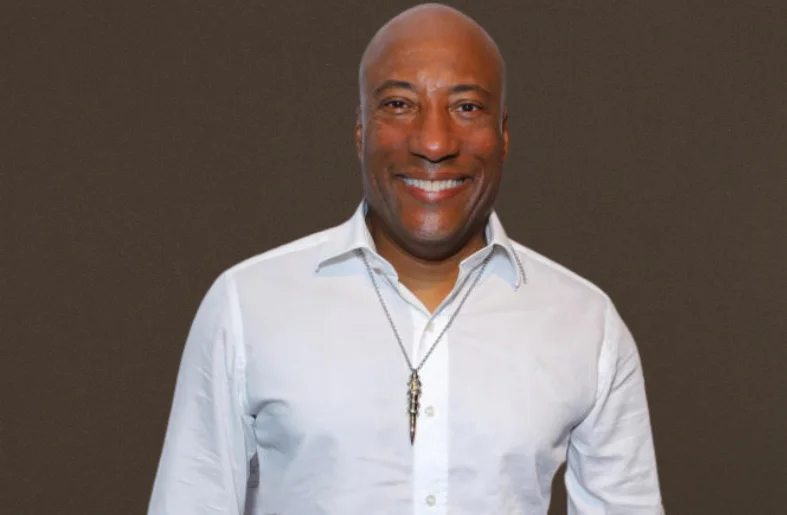
Byron Allen’s net worth is estimated at about $1 billion in 2026, although his exact personal wealth is not publicly disclosed. His fortune comes mainly from private media ownership, television production, broadcasting, and major acquisitions. Because Allen Media Group is privately held, any outside net-worth figure should be treated as an estimate rather than an audited total.
Allen’s financial story is unusual because he began as a stand-up comedian rather than a Wall Street investor. He later built a television distribution business and used its cash flow to acquire valuable media properties. His portfolio has included The Weather Channel television network, local TV stations, TheGrio, Local Now, and other entertainment assets.
Byron Allen Quick Facts
| Detail | Information |
| Full name | Byron Allen Folks |
| Born | April 22, 1961 |
| Age in 2026 | 65 |
| Birthplace | Detroit, Michigan |
| Profession | Media entrepreneur, producer, comedian |
| Estimated net worth | About $1 billion |
| Main company | Allen Media Group |
| Major asset | The Weather Channel television network |
| Other interests | TV stations, streaming, production, digital media |
| Primary wealth source | Private media ownership and acquisitions |
What Is Byron Allen’s Net Worth in 2026?
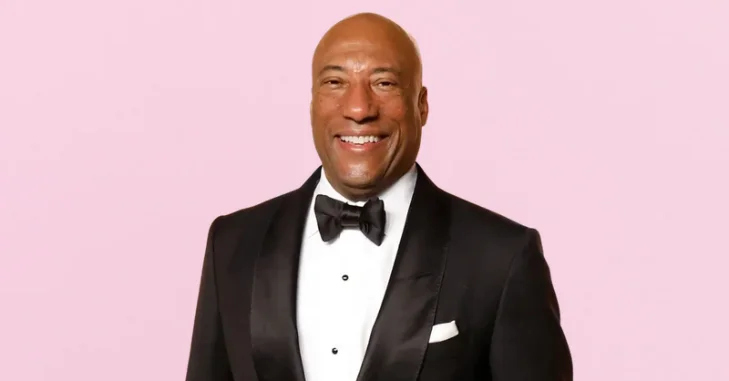
Byron Allen’s net worth is estimated at approximately $1 billion in 2026. The figure reflects his ownership of Allen Media Group and its extensive media assets. However, his company is privately held, so outsiders cannot independently calculate his equity, debts, taxes, and other liabilities with complete accuracy.
Celebrity Net Worth listed Allen at $1 billion in its June 2026 update. That estimate provides a useful benchmark, but it is not the same as a public financial filing. Private-company valuations can change substantially depending on debt, revenue, cash flow, and market conditions.
This distinction matters when discussing wealthy business founders. Owning companies and media properties valued in the hundreds of millions does not mean the owner holds that amount in cash. Newsprest applies the same distinction between business value and personal wealth in its Liver King net worth coverage.
How Did Byron Allen Make His Money?
Allen built most of his wealth through television production, distribution, broadcasting, and media ownership. His strategy began with relatively inexpensive syndicated television programs. He then expanded into networks, digital platforms, and local television stations.
The business model gave him something more valuable than a successful television show. It gave him ownership and control over content that could generate advertising and distribution revenue over time. Those earnings helped create the foundation for larger acquisitions.
His career also shows why reported deal values should not be confused with personal wealth. A media company can borrow money or raise financing to acquire assets. The purchase price does not automatically become part of its founder’s personal net worth.
From Stand-Up Comedy to Television Business
Allen started performing comedy while he was young and appeared on The Tonight Show Starring Johnny Carson. He later joined the NBC series Real People, giving him experience in national television. Yet performing eventually became only one part of his career.
He moved toward producing and distributing television programming through the company that became Entertainment Studios. The business was later brought under the Allen Media Group name. Instead of relying only on acting or hosting fees, he developed a company that owned and distributed programming.
That ownership model helped separate his financial path from that of many entertainers. A performer usually earns money from contracts, appearances, or royalties. A media owner can also benefit from advertising, distribution rights, stations, networks, and the long-term value of business equity.
The Weather Channel Became a Landmark Acquisition
One of Allen’s most important deals came in 2018 when his company acquired The Weather Channel television network. The transaction was widely reported at approximately $300 million. It significantly raised Allen’s profile as a major media buyer.
The acquisition covered the television business rather than every property carrying The Weather Channel name. Weather.com and certain digital assets were not part of the transaction. That distinction is important because the television network and digital weather properties have had different ownership structures.
The deal also included Local Now, which developed into a free streaming platform offering local content. Allen later expanded his company through additional broadcasting and digital investments. The Weather Channel remains one of the best-known assets associated with his media business.
Television Stations Added Scale to His Empire
Local broadcasting became another major part of Allen’s expansion strategy. His company spent hundreds of millions of dollars acquiring stations across American markets. A 2021 transaction alone involved a reported $380 million purchase of 10 television stations from Gray Television.
Owning local stations can create several revenue sources. Stations sell advertising and can receive distribution fees from cable, satellite, and other television providers. Network affiliations can also give local stations access to popular national programming.
These assets help explain why Allen’s wealth cannot be understood by looking at his entertainment career alone. He became an owner of infrastructure that distributes television content to U.S. households. That shift from talent to ownership is central to his financial story.
TheGrio, Local Now, and Other Media Assets
Allen’s company also owns or has invested in several brands outside traditional local broadcasting. It acquired TheGrio in 2016 and later purchased Black News Channel assets from bankruptcy. The 2022 Black News Channel transaction was approved at a purchase price of $11 million.
The company then integrated those assets into its broader media operations. Its portfolio has also included Local Now and numerous television networks and entertainment properties. Each business contributes differently through advertising, distribution, licensing, or other revenue.
These holdings make Allen’s fortune different from celebrity wealth based mainly on salaries or endorsements. His financial position depends heavily on the value of privately owned operating companies. Readers comparing celebrity fortunes can also see Newsprest’s Cardi B net worth coverage for another example of separating earnings from personal wealth.
How Much Is Allen Media Group Worth?
There is no simple public market capitalization for Allen Media Group because it is privately held. That means investors cannot look up a share price and multiply it by Allen’s ownership stake. Estimating the company’s value requires assumptions about assets, revenue, debt, and future cash flow.
Recent reporting confirms that the company controls a broad collection of television, production, broadcasting, and digital interests. Allen has also pursued multibillion-dollar acquisitions, although proposed purchase prices should not be treated as evidence of his personal fortune. Financing for large corporate deals can involve lenders and outside capital.
This is why a $1 billion personal estimate can coexist with acquisition proposals worth several billion dollars. A buyer does not necessarily fund an entire corporate acquisition from personal cash. Debt financing and investment partners are common parts of large media transactions.
Major Deals Behind Byron Allen’s Wealth
| Deal or asset | Reported value or significance | Why it matters |
| The Weather Channel TV network | About $300 million | Major national media asset |
| 10 Gray/Quincy TV stations | $380 million | Expanded local broadcasting portfolio |
| Black News Channel assets | $11 million | Added assets later tied to TheGrio |
| TheGrio | Acquired in 2016 | Expanded digital and Black-focused media presence |
| Local Now | Acquired with Weather Group | Added free streaming distribution |
| Syndicated programming | Built over decades | Created early business cash flow |
The table shows why no single television salary explains Allen’s financial position. His fortune developed through decades of ownership, reinvestment, financing, and acquisitions. That pattern resembles a media entrepreneur more than a conventional celebrity career.
Did Byron Allen Really Bid Billions for Major Media Companies?
Allen has made several highly publicized bids for major entertainment assets. Reports have connected him with attempted deals involving ABC and other large media properties. In 2023, his reported proposal involving ABC and other Disney television assets was valued at around $10 billion.
He later pursued other large targets, but making a bid is not the same as completing a purchase. It also does not prove that the bidder personally possesses the full offer amount. Large acquisitions normally rely on combinations of equity, institutional financing, debt, and other funding sources.
The distinction prevents a common net-worth mistake. A $10 billion acquisition proposal does not mean the person behind it has a $10 billion fortune. Personal wealth and corporate purchasing capacity are different measurements.
Is Byron Allen a Billionaire?
Current third-party estimates support describing Allen as a billionaire based on an estimated fortune around $1 billion. Still, there is no publicly available personal balance sheet confirming an exact figure. His private ownership structure makes precise outside calculations difficult.
What can be documented more clearly is the scale of the businesses he controls. His company owns significant television, broadcasting, streaming, and digital assets. Those holdings provide a reasonable basis for estimates placing his wealth far above what he earned during his early comedy career.
The billionaire label should therefore be understood as an informed estimate. It is not a statement that Allen has $1 billion sitting in cash. Much of an entrepreneur’s wealth can exist as equity in companies and other assets.
Why Estimates of His Fortune Can Change
Private-company wealth can rise or fall without a founder selling anything. Media valuations depend on advertising demand, distribution revenue, borrowing costs, audience behavior, and expectations about future earnings. Traditional television businesses have also faced pressure as U.S. audiences continue moving toward streaming.
Debt is another important variable. If a business owns valuable assets but carries substantial liabilities, the founder’s equity may be lower than the headline asset values suggest. Public estimates rarely provide a complete picture of every loan, tax obligation, investment, and ownership arrangement.
That uncertainty is common in celebrity and entrepreneur wealth reporting. Newsprest’s Gerry Turner net worth profile offers another example of why career success and estimated personal wealth need separate treatment. The most useful approach is to view published estimates as benchmarks rather than exact bank balances.
What Makes Byron Allen’s Financial Story Different?
Allen’s biggest financial shift was moving from earning money in entertainment to owning the businesses behind entertainment. He built a company around content ownership and distribution before expanding into larger media properties. That gave him assets capable of producing revenue long after a television appearance ended.
His story also demonstrates the financial difference between income and equity. High annual income can make someone wealthy, but ownership can create value on a much larger scale. A successful private company may become its founder’s most valuable asset.
For U.S. readers interested in other entertainment careers, Newsprest’s broader entertainment coverage includes profiles of performers, entrepreneurs, and public figures. Those stories show how different combinations of contracts, businesses, property, and ownership can shape reported wealth.
Bottom Line
The most defensible public estimate places Byron Allen’s fortune at around $1 billion in 2026. His wealth was built through syndicated television, private media ownership, The Weather Channel, local broadcasting, streaming, and other acquisitions. The exact number remains uncertain because Allen Media Group does not publish the detailed financial information available from a public company.
His career explains why the source of wealth matters as much as the headline number. Allen moved from appearing on television to owning companies that create and distribute television programming. That transition from performer to media owner is the central reason his fortune reached billionaire territory.
Frequently Asked Questions
What is Byron Allen net worth in 2026?
Byron Allen net worth is estimated at about $1 billion in 2026 by current third-party wealth tracking. The exact figure cannot be independently confirmed because his main company is privately held. Changes in business valuations and debt could move the estimate in either direction.
How did Byron Allen become rich?
He became wealthy primarily by owning, producing, and distributing television content. He later expanded into television networks, local stations, streaming, and other media properties. His business ownership became far more important financially than his original work as a comedian.
Does Byron Allen own The Weather Channel?
Allen Media Group owns The Weather Channel television network. His company acquired the television operation in 2018 in a transaction reported at roughly $300 million. The deal did not include all digital properties associated with the Weather Channel brand.
Does Byron Allen own Allen Media Group?
Allen founded the company that developed into Allen Media Group and remains its chairman and chief executive. Recent reporting describes the media company as privately owned by him. That private ownership is a major reason his personal fortune is difficult to calculate precisely.
Is Byron Allen richer than most comedians?
Published estimates place his fortune around $1 billion, which puts him far beyond the earnings associated with a typical comedy career. Most of his current wealth is linked to business ownership rather than stand-up performances. His career evolved from entertainer to media entrepreneur and owner.
