

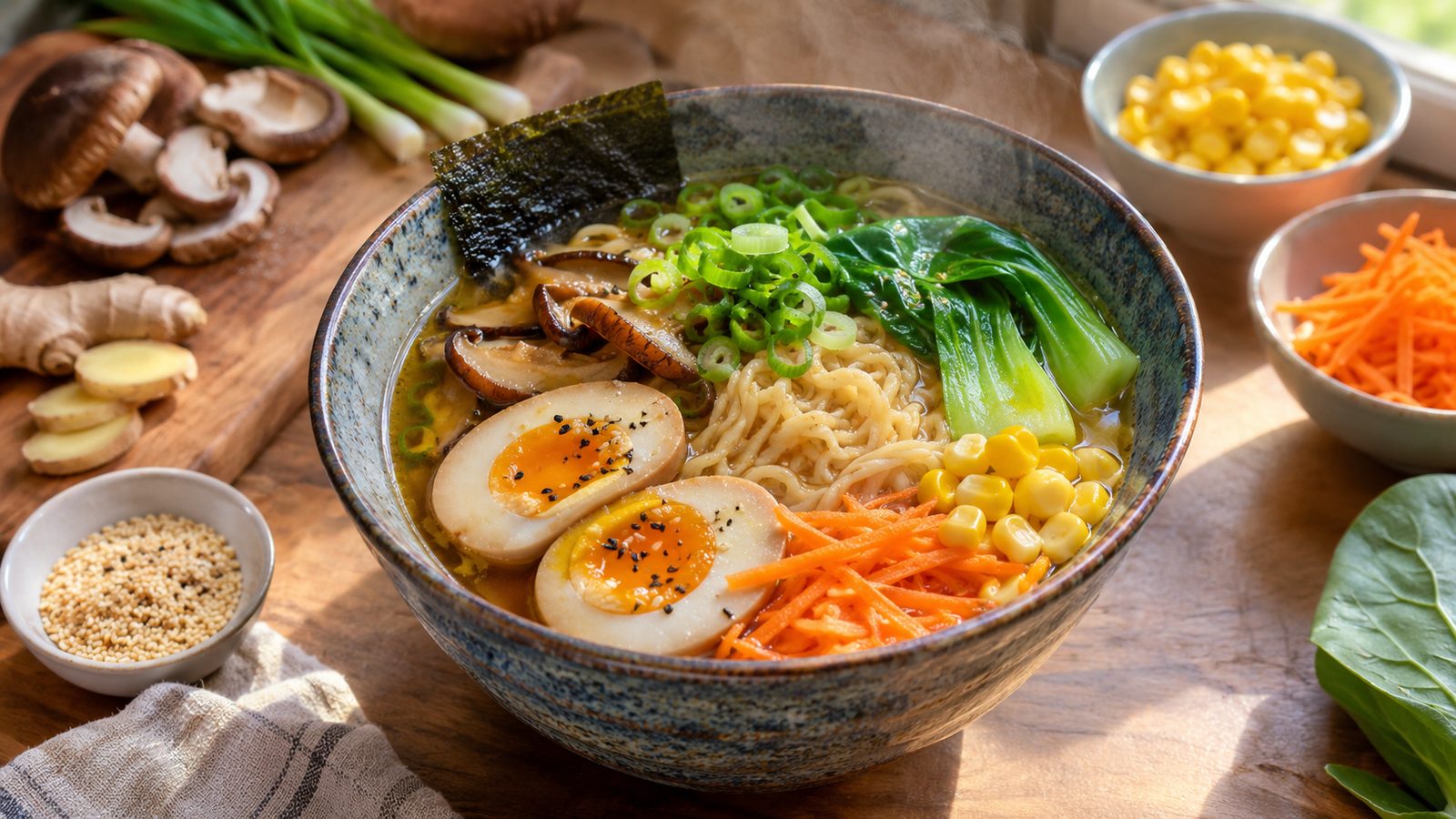
Low sodium ramen can still deliver a savory, satisfying bowl without relying on a full seasoning packet. The easiest approach combines lower-sodium noodles, unsalted broth, fresh aromatics, vegetables, and a controlled amount of salty seasoning. Checking the entire package label matters because serving sizes can hide the true sodium total. Direct answer: A lower-sodium bowl starts with plain noodles and no-salt-added or low-sodium broth. Build flavor with garlic, ginger, mushrooms, sesame oil, citrus, and chile. Add soy sauce, miso, or packaged seasoning sparingly after tasting the broth.
Low Sodium Ramen at a Glance
| Question | Practical answer |
|---|---|
| U.S. daily sodium Daily Value | Less than 2,300 mg |
| FDA definition of “low sodium” | 140 mg or less per serving |
| “Reduced sodium” meaning | At least 25% less than the regular version |
| Easy sodium-saving move | Use less or none of the seasoning packet |
| Good flavor builders | Garlic, ginger, mushrooms, citrus, chile, sesame oil |
| Useful noodle choices | Plain dried noodles, rice noodles, or unseasoned noodle cakes |
| Better broth starting point | No-salt-added or low-sodium broth |
| Key shopping habit | Compare sodium for the amount you will actually eat |
The FDA sets the Daily Value for sodium below 2,300 milligrams per day. It also considers 20% Daily Value or more per serving high in sodium. Americans average about 3,400 milligrams daily, according to FDA guidance.
Key Takeaways
* Check sodium for the whole amount you plan to eat, not only one listed serving. * “Reduced sodium” does not automatically mean the food qualifies as “low sodium.” * Plain noodles give you more control than heavily seasoned instant varieties. * Use aromatics, acidity, heat, and mushrooms to strengthen flavor before adding salt. * Eggs, tofu, chicken, vegetables, and edamame can turn noodles into a fuller meal. * People following prescribed sodium limits should follow their clinician’s individual guidance.
Why Instant Noodle Bowls Can Contain So Much Sodium
The flavor packet is an obvious sodium source, but it is not always the only one. Sodium may also appear in the noodle block, broth concentrates, sauces, and processed toppings. Restaurant versions can combine several of these ingredients in one bowl. Current recipe guidance from registered dietitians notes that many instant products contain roughly 1,000 to 2,000 milligrams per package. Sodium varies substantially across products, so the Nutrition Facts label remains the better guide. A recent lower-sodium homemade recipe contained 494 milligrams per serving. That difference explains why cooking from basic ingredients gives you more control. You decide how much broth concentrate, sauce, and seasoning enters the pot. You can also compare brands before choosing your noodles or stock.
What “Low Sodium” Really Means on U.S. Food Labels
Food-label wording can be confusing because “low,” “reduced,” and “no salt added” mean different things. Under FDA guidance, “low sodium” means 140 milligrams or less per serving. “Reduced sodium” means at least 25% less sodium than the regular reference food. A reduced-sodium product can therefore remain quite salty. For example, reducing a high-sodium product by one quarter may still leave several hundred milligrams per serving. Always compare the milligrams on the Nutrition Facts panel instead of relying on front-package wording. Serving size creates another common trap. A package may contain more than one labeled serving, while you intend to eat the whole package. Multiply sodium by the number of servings you will consume before comparing products.
How to Make a Lower-Sodium Bowl Taste Better
Salt contributes flavor, but it is only one tool available to a home cook. Aromatics, acids, toasted oils, vegetables, spices, and natural umami can create a deeper broth. Combining several of these elements makes less salt feel less noticeable. The Newsprest Food section has more cooking and ingredient ideas. Start with garlic and fresh ginger in a small amount of toasted sesame oil. Mushrooms add savory depth, while scallions provide freshness and mild sharpness. Lime juice or rice vinegar can brighten a broth that tastes flat. Heat also changes how a bowl tastes without adding much sodium itself. Try red pepper flakes, cayenne, fresh chile, or another unsalted spice. Check bottled chile sauces carefully because their sodium levels can differ widely.
A Simple Formula for Building Low Sodium Ramen
You do not need a complicated restaurant recipe to make a satisfying noodle soup. Think of the bowl as five adjustable parts instead. This method also makes label comparison easier.
1. Choose the noodles. Start with plain noodles and compare sodium between brands. 2. Build the broth. Use no-salt-added broth, low-sodium broth, or water with aromatics. 3. Add umami. Try mushrooms or a measured amount of miso, soy sauce, or coconut aminos. 4. Add vegetables. Bok choy, carrots, spinach, cabbage, corn, and mushrooms work well. 5. Choose protein. Add an egg, tofu, chicken, shrimp, or shelled edamame. 6. Finish with acidity. Lime juice or rice vinegar can sharpen the finished broth. 7. Taste before seasoning. Add salty ingredients last and in small measured amounts.
This order prevents several salty ingredients from accumulating unnoticed. It also lets fresh flavors become established before extra seasoning enters the bowl. You may find that you need less sauce than expected.
Should You Throw Away the Seasoning Packet?
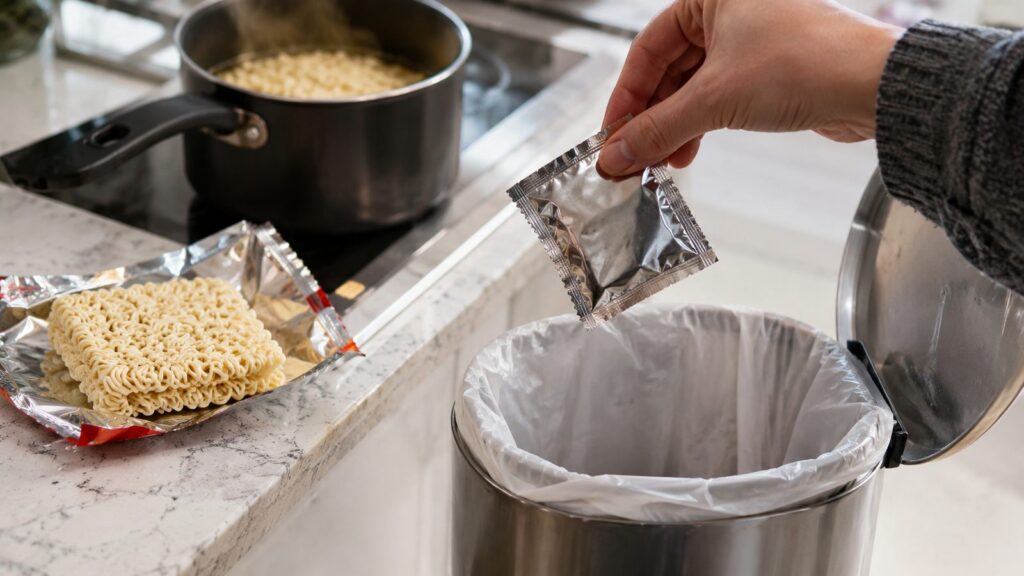
You do not necessarily need to throw it away, but using the whole packet reduces your control. The FDA specifically suggests using only a small amount of flavoring packets when reducing sodium. It also recommends limiting instant noodles and other highly seasoned packaged foods. Try starting with one quarter of the packet and taste the broth. Add garlic, ginger, pepper, mushrooms, or citrus before adding more powder. This method preserves some familiar flavor while making sodium easier to manage. You can also skip the packet and create your own base. Unsalted broth, aromatics, sesame oil, mushrooms, and a measured savory condiment work well together. This approach makes the sodium contribution of each packaged ingredient easier to identify.
Coconut Aminos, Soy Sauce, and Miso Still Need Label Checks
Replacing regular soy sauce can reduce sodium, but substitutes are not automatically sodium-free. Coconut aminos can contain less sodium than many soy sauces, although amounts vary by brand. Reduced-sodium soy sauce can still contribute several hundred milligrams per tablespoon. Miso also brings salt alongside its distinctive fermented flavor. Use these ingredients as concentrated seasonings instead of treating them as a broth base. Measuring them with a teaspoon or tablespoon helps prevent accidental overuse. Taste each addition before adding another salty component. Miso, sauce, broth, chile crisp, and processed toppings can stack quickly. A flavorful bowl often needs only one or two concentrated savory ingredients.
How to Shop for a Lower-Sodium Instant Option
Begin with the Nutrition Facts panel rather than health claims on the package front. Compare sodium per serving, serving count, and sodium for the entire package. The FDA considers 20% Daily Value or more per serving a high amount. Some newer U.S. options contain considerably less sodium than traditional instant products. Vite Ramen, for example, currently advertises a lower-sodium line at about 470 milligrams per packet. Product formulas can change, so confirm the package label before buying. Unseasoned noodle cakes are another useful route because they separate noodles from a salty flavor system. Plain rice noodles can also start with little sodium before sauces are added. These choices put more of the final sodium level under your control.
Is Lower Sodium Always Better?
Sodium is an essential nutrient, so the goal is not to eliminate it completely. The larger concern is routinely consuming more than recommended. High-sodium diets are associated with increased high blood pressure risk. The American Heart Association also encourages people to reduce excess sodium. Recent AHA guidance discusses 1,500 milligrams daily as an appropriate lower target for many people addressing blood pressure. Individual needs can differ because health conditions and medical treatments matter. People with kidney disease, heart conditions, hypertension, or prescribed sodium restrictions need more individualized advice. A clinician or registered dietitian can provide a suitable daily target. General food guidance should not replace that personal recommendation.
Easy Ways to Make the Meal More Filling
A noodle bowl becomes more balanced when you add protein and vegetables. Eggs, tofu, chicken, shrimp, or edamame provide more staying power than noodles alone. Fresh or frozen vegetables also increase volume without requiring salty seasoning. Try cabbage, bok choy, spinach, carrots, mushrooms, or frozen mixed vegetables. Choose unseasoned frozen vegetables whenever possible because prepared sauces can add sodium. The FDA similarly recommends fresh or frozen vegetables without sauces when cutting sodium. Readers interested in broader wellness topics can also browse the Newsprest Fitness section. The Newsprest homepage also collects the site’s latest guides and features.
Frequently Asked Questions About Low Sodium Ramen
Is low sodium ramen healthy?
It can fit into a balanced eating pattern when ingredients suit your individual needs. Sodium is only one part of nutrition, so consider protein, vegetables, fiber, and saturated fat too. A homemade bowl offers more control over each component.
How much sodium should a bowl contain?
There is no universal sodium limit for one meal. The FDA Daily Value is less than 2,300 milligrams for an entire day. An AHA expert recently suggested roughly 500 to 600 milligrams per meal as a practical range.
Are the noodles themselves high in sodium?
It depends on the product. Some noodles contain sodium before any seasoning is added, while plain rice noodles can contain little. Check the label instead of assuming all sodium comes from the packet.
Does rinsing instant noodles remove all the sodium?
No. Rinsing may remove some sodium on the surface, but it cannot guarantee a specific final amount. Choosing lower-sodium noodles and controlling the broth provides a more dependable strategy.
Is “reduced sodium” the same as “low sodium”?
No. FDA rules define reduced sodium as at least 25% less than the regular product. A food labeled low sodium must meet the separate 140-milligram-per-serving threshold.
Can I eat instant noodles while following a sodium-restricted diet?
That depends on your prescribed limit and the product’s Nutrition Facts. Some packages may consume a large portion of a daily sodium allowance. Ask your clinician or dietitian when your restriction is related to a medical condition.
The Bottom Line
Low sodium ramen becomes much easier when you stop depending on one salty seasoning packet for every flavor. Start with plain noodles, controlled broth, fresh aromatics, vegetables, protein, and acidity. Then add concentrated salty ingredients gradually after tasting. The Nutrition Facts label remains your most useful shopping tool in the United States. Check the serving size, total package sodium, and percentage Daily Value before choosing a product. A little label reading can leave far more room for flavor at the table. —
