

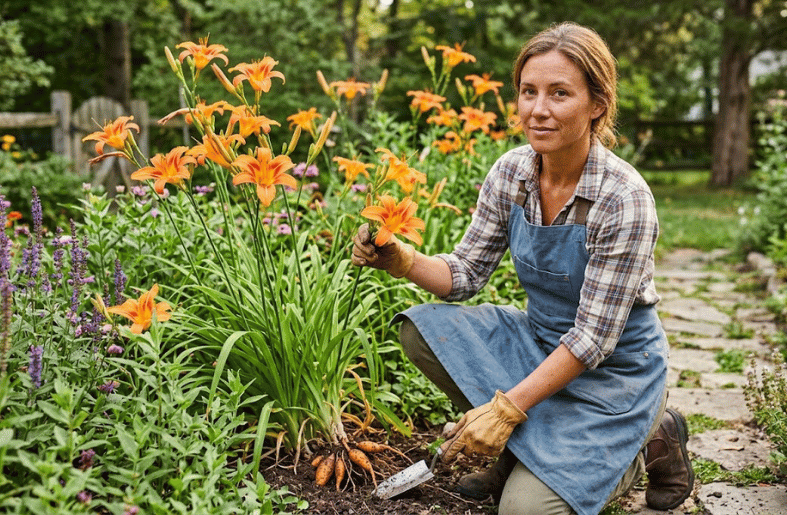
The Hemerocallis fulva orange daylily is a tough perennial known for vivid summer flowers. It grows across much of the United States after escaping older gardens. Gardeners value its resilience, but its aggressive spread deserves careful management.
Direct answer: Hemerocallis fulva is the familiar orange or ditch daylily found along roadsides and older properties. It grows best in sun or partial shade and tolerates many soils. However, underground rhizomes let it spread rapidly, so U.S. gardeners should check local invasive guidance before planting it.
Hemerocallis Fulva at a Glance
| Feature | Details |
|---|---|
| Scientific name | Hemerocallis fulva |
| Common names | Orange daylily, ditch lily, tawny daylily, common daylily |
| Plant type | Herbaceous perennial |
| Native range | Asia |
| Typical flower color | Tawny orange to orange-red |
| Flower life | About one day per individual bloom |
| Bloom season | Generally late spring through summer, depending on location |
| Light | Full sun to partial shade |
| Soil | Adaptable, with good performance in well-drained soil |
| Water needs | Moderate once established |
| Spread | Primarily through underground rhizomes and root divisions |
| U.S. concern | Naturalized widely and invasive in some regions |
| Cat safety | Daylilies can be highly dangerous to cats |
Key Takeaways
* The orange daylily is not native to the United States. * Each individual flower usually remains open for only one day. * Established clumps can survive poor soil, heat, and periods of drought. * Underground growth allows colonies to expand beyond their original planting area. * Invasive status differs among states and local jurisdictions. * Modern clump-forming daylily hybrids may behave differently from the roadside species. * Cat owners should keep pets away from daylilies.
How to Identify Hemerocallis Fulva Orange Daylily
This perennial develops dense clusters of long, narrow leaves from its base. The leaves are bright green, strap-shaped, and often arch toward the ground. Flower stalks rise well above this fountain-like foliage during bloom.
Flowers are usually tawny orange with a yellow throat and darker markings. Six petal-like segments form the familiar trumpet-shaped bloom. Mature flowers commonly measure several inches across and appear in succession.
A single flower does not stay attractive for an entire week. It normally opens for one day before fading. Other buds then open, allowing a mature clump to remain colorful much longer.
The underground growth pattern offers another useful identification clue. Thick roots and spreading rhizomes help colonies expand into dense patches. This trait separates the plant’s growth behavior from many restrained garden perennials.
Why Is It Called a Daylily?
The name “daylily” describes each flower’s short life. A bloom generally opens during the day and fades quickly. A stalk carries several buds, so fresh flowers replace older ones.
The botanical genus name reflects that same characteristic. Hemerocallis comes from Greek words associated with “day” and “beauty.” The name therefore refers to attractive flowers with brief individual lives.
Despite its common name, a daylily is not a true lily. Modern botanical classification places daylilies in the Asphodelaceae family. True lilies belong to the separate genus Lilium.
Where Orange Daylilies Grow in the United States
Orange daylilies arrived in North America as ornamental garden plants. They later escaped cultivation and became established across large parts of the country. Old homesites and abandoned gardens often reveal long-lived colonies.
You may also see them beside highways, drainage ditches, field edges, and woodland margins. These locations explain the widely used name “ditch lily.” Dense roadside colonies can survive with little direct care.
Their exact behavior depends partly on local climate and environmental conditions. Some authorities classify the species as invasive within specific states or regions. Other jurisdictions may not list it as a regulated invasive plant.
That variation matters when planning a U.S. garden. Check your state extension service or local invasive-plant program before adding new plants. Local guidance is more useful than a single national rule.
Growing Orange Daylilies in a Managed Garden
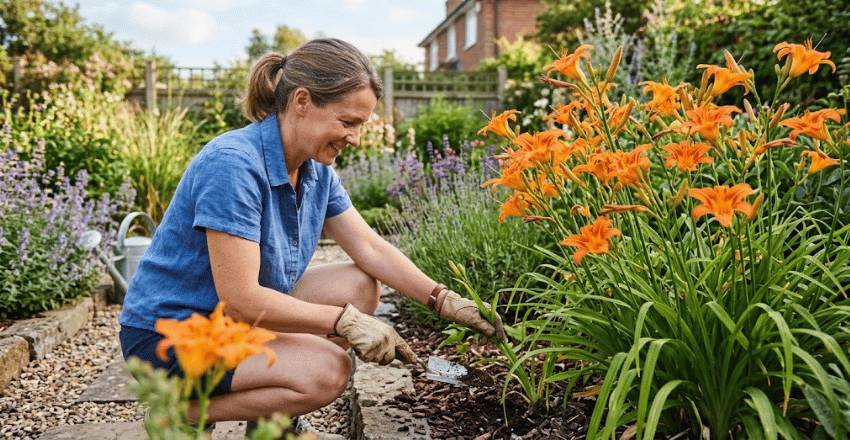
The hemerocallis fulva orange plant has a reputation for tolerating difficult growing conditions. Full sun usually supports strong flowering, although partial shade is also tolerated. Deep shade can reduce flower production.
Average garden soil works for established plants in many locations. Well-drained soil is preferable, especially where winter moisture could remain around roots. The plant can also tolerate clay and relatively poor soils.
Water newly planted divisions until their roots become established. Older clumps generally handle short dry periods better than many delicate perennials. Extra water may support flowering during unusually dry spring or early-summer weather.
You rarely need an elaborate fertilizer program for this vigorous species. Excessive feeding can encourage unnecessary leafy growth in already fertile soil. Gardeners should focus more on containment than aggressive fertilization. If you also grow vegetables nearby, this guide to natural methods for aphids on tomato plants covers common garden pests.
Basic Care Checklist
* Provide full sun when possible for stronger flowering. * Use a location with reasonable soil drainage. * Water new divisions while roots become established. * Remove faded flower stalks after blooming finishes. * Cut away dead foliage when needed. * Divide overcrowded clumps if you intend to keep them. * Watch garden boundaries for unwanted underground spread.
How and When the Flowers Bloom
Bloom timing differs with climate and geographic location. U.S. observations generally place flowering between late spring and summer. Northern areas may see their strongest display later than warmer regions.
Mature stalks carry multiple buds rather than one permanent flower. One blossom fades while another prepares to open. That sequence creates a display lasting far longer than a single bloom.
Removing spent flowers can keep a formal garden looking tidier. Deadheading will not solve underground spreading because rhizomes drive much of that expansion. Root management remains more important for controlling an established colony.
Is Hemerocallis Fulva Invasive in the U.S.?
The answer requires local context rather than a simple national yes. The species has naturalized widely and is considered invasive in some American jurisdictions. Dense stands can crowd neighboring vegetation when they escape managed gardens.
For example, invasive-plant programs in parts of the Mid-Atlantic warn about its ability to form persistent colonies. The USDA database also records invasive designation information for particular locations. Florida assessments show why regional classifications can differ.
This distinction matters before you buy, divide, or share plants. A species can create ecological problems without appearing on every state list. Always use current state and county guidance for planting decisions.
Gardeners near natural areas should take extra care. Rhizomes or discarded root pieces can establish away from the intended flower bed. Never dump unwanted roots or divisions beside roads, streams, woods, or vacant land.
How to Control an Expanding Orange Daylily Patch
Small clumps are easiest to address before they spread widely. Dig around the entire root system and remove fleshy roots and rhizomes. Check the area again because remaining pieces may produce new shoots.
Large colonies can require repeated work over more than one season. Removing top growth alone may not eliminate the underground plant. Consistent removal weakens regrowth and prevents the patch from expanding unchecked.
Avoid moving contaminated soil into other garden areas. Root fragments hidden in soil may start another colony. Bag or dispose of plant material according to local invasive-plant recommendations.
If a colony borders valuable native habitat, seek local expert guidance. Extension offices can recommend control methods suited to your state and site. They can also explain whether herbicide use is appropriate and legally permitted.
Better Choices for Wildlife-Friendly Gardens
Gardeners who like daylilies have many cultivated options beyond roadside orange forms. Numerous modern hybrids offer different colors, flower shapes, and growth habits. Some remain in tighter clumps and are easier to manage.
Native perennials can provide another option for ecologically sensitive landscapes. The strongest choice depends on your region, light, soil, and moisture. Your state extension service can suggest species suited to local pollinators.
Avoid assuming every orange daylily has identical environmental behavior. Cultivars and hybrids can differ from the spreading species discussed here. Confirm the botanical name before buying or sharing plants.
Safety Around Cats and Other Pets
Cat owners should treat daylilies with particular caution. Veterinary sources associate daylily exposure with severe kidney injury in cats. Even a garden plant can create risk when pets have access to it. For other feeding-time basics, see this guide on elevated cat bowls for U.S. cat owners.
Do not rely on the plant’s edible reputation for humans as proof of pet safety. Human food traditions and animal toxicity are separate issues. A plant that people consume can still harm another species.
Contact a veterinarian immediately after suspected feline exposure. Do not wait for obvious illness before seeking professional help. Fast treatment can be important with serious plant poisoning.
Frequently Asked Questions
Is Hemerocallis fulva orange invasive everywhere?
No, invasive classification varies across the United States. Some states and local programs specifically flag the species because it forms dense colonies. Check your local extension office before planting or distributing it.
Does an orange daylily flower last only one day?
Yes, an individual flower generally lasts about one day. The plant carries multiple buds that open at different times. This sequence allows the clump to appear in bloom for weeks.
Does Hemerocallis fulva prefer full sun?
Full sun generally encourages stronger flowering and vigorous growth. The plant can also tolerate partial shade in many gardens. Heavier shade may reduce the number of flowers.
How tall does orange daylily grow?
Leaf clumps are usually much shorter than their flowering stalks. Mature flower stalks may reach several feet under suitable conditions. Exact size changes with climate, soil, moisture, and local growing conditions.
How does orange daylily spread?
The plant spreads strongly through underground rhizomes and fleshy root structures. These structures allow established colonies to become wider over time. Root fragments can also create problems when moved or discarded carelessly.
Is orange daylily safe for cats?
No, cat owners should treat daylilies as dangerous plants. Exposure has been associated with severe kidney injury in cats. Contact a veterinarian promptly if you suspect ingestion.
Should You Grow It?
The Hemerocallis fulva orange daylily combines attractive flowers with exceptional toughness. Those qualities explain why it survived around American homesites for generations. They also explain why the species escaped gardens so successfully.
For a contained site, local rules and ecological conditions should guide your decision. Gardeners near natural areas may prefer restrained hybrids or regionally native alternatives. Responsible planting includes planning for the plant’s future spread.
If an orange roadside colony already grows on your property, identify it before taking action. Check local invasive guidance and decide whether containment or removal makes sense. Good identification prevents unnecessary treatment of similar garden hybrids.
Final Takeaway
Orange daylilies are attractive, adaptable, and historically familiar across much of America. They are also non-native plants capable of persistent vegetative spread. That combination makes informed management more important than simple planting advice.
Before adding one, confirm the species and research its status where you live. Keep established clumps away from natural habitats and monitor their boundaries. Choosing the right plant for the right location protects both your garden and nearby ecosystems.
For more general features and newly published topics, readers can continue exploring Newsprest. The site publishes articles across several subject areas for a broad audience. Its editorial information also explains the publication’s wider content focus.
