

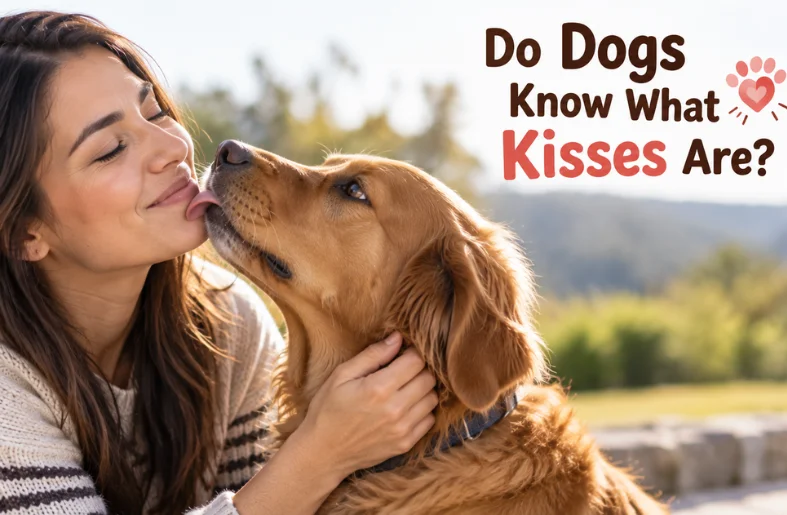
If you wonder do dogs know what kisses are, the answer is more learned than instinctive. Dogs do not naturally use human-style kissing to express love. Still, many pets learn that a gentle kiss predicts warmth, attention, or praise.
Direct answer: Dogs usually don’t understand a kiss the way humans do. They can learn that your kiss often comes with a soft voice, petting, and friendly attention. Your dog’s body language matters more than your intention. Relaxed behavior suggests comfort, while avoidance signals a need for space.
| Question | What owners should know |
|---|---|
| Do dogs naturally understand kisses? | No. Human kissing is not a built-in canine social signal. |
| Can a dog learn what a kiss predicts? | Yes. Repeated positive experiences can create a favorable association. |
| Does every dog enjoy kisses? | No. Preferences vary by dog, history, health, and situation. |
| What suggests discomfort? | Turning away, licking lips, freezing, stiff posture, or trying to leave. |
| What is safer with unfamiliar dogs? | Skip face-to-face kissing and let the dog choose whether to approach. |
Key Takeaways
- Human kisses are learned signals for dogs, not natural canine gestures.
- A relaxed dog may associate kisses with attention, praise, and safety.
- Stillness does not always mean enjoyment, so watch the whole body.
- Supervise children around dogs, including familiar family pets.
- Play, sniffing, gentle touch, and reward-based training can clearly communicate affection.
Do Dogs Know What Kisses Are in Human Terms?
Dogs probably do not assign a human cultural meaning to a kiss. They understand interactions through experience, scent, posture, tone, and predictable outcomes. PetMD’s current guidance says dogs do not naturally understand kisses the way people do.
A familiar pet can still learn that your face coming closer usually leads to something pleasant. That learned association can make the interaction feel safe and predictable. It does not prove the dog understands the abstract human meaning of love.
Research does show that dogs are unusually attentive to human social behavior. A Scientific Reports study found dogs changed facial movements when people watched them. That sensitivity helps explain why repeated household rituals can gain meaning over time.
How Dogs Learn What a Kiss Predicts
Dogs are strong associative learners, so context matters each time affection happens. A soft voice, gentle petting, and relaxed posture may accompany your kiss. Over time, those repeated cues can make the sequence familiar. Reward-based teaching relies on the same pattern, as Newsprest explains in its dog training guide.
The human-dog bond also involves measurable social responses beyond kissing. A 2015 Science study linked mutual gaze with an oxytocin feedback loop in dogs and owners. That finding concerns gaze, not kisses, so it should not be treated as proof about kissing.
Your dog also learns from what happens after contact. If a kiss is followed by praise or comfortable petting, the experience may become positive. If the dog feels trapped, the same gesture can create tension instead.
How to Tell Whether Your Dog Enjoys Kisses
Look at the whole body before deciding your dog likes being kissed. A loose posture and voluntary approach are better clues than one wagging tail. Your dog should also be able to move away easily.
| More comfortable signals | Possible stress signals |
|---|---|
| Loose body and soft face | Stiff body or sudden freezing |
| Stays nearby by choice | Turns head or body away |
| Returns for more contact | Lip licking or repeated yawning |
| Relaxed movement | Backs away or tries to leave |
| Soft eyes | Wide eyes or visible eye whites |
AAHA guidance lists lip licking, yawning, freezing, and turning away among common anxiety or distress signals. PetMD also advises watching for avoidance and tense behavior during close affection. One signal alone can be ambiguous, so judge the pattern and situation together.
If your dog leaves after a kiss, do not follow and repeat the contact. Let the dog choose whether to come back for more interaction. That simple response respects the message without punishing a warning sign.
Why Licking Is Not the Same as Human Kissing
Owners often call face licking “dog kisses,” but licking can have several meanings. A dog may lick to greet, investigate scent, seek attention, or reduce tension. PetMD notes that face licking can reflect friendliness, curiosity, communication, or stress.
That means a lick does not automatically equal affection. Context shows whether behavior looks relaxed, excited, appeasing, or repetitive. Reading several signals together gives you a better answer. This distinction matters because people can mistake tolerance for enthusiasm. A dog that stays still may be comfortable, but freezing can also reflect stress.
Give your pet room to choose rather than assuming closeness is always welcome.
When Kissing a Dog Is a Bad Idea
Skip face-to-face kissing with unfamiliar dogs, nervous dogs, or animals showing avoidance. A dog in pain or guarding food may also need more space. Close facial contact can remove the animal’s easiest escape option. Extra care matters around children in U.S. homes. The CDC says young children should always be supervised around dogs, including familiar pets.
Children are also more likely than adults to be bitten by dogs. The CDC also advises against letting dogs lick around children’s mouths and faces. Saliva can carry germs, even when a dog appears healthy. For children, keeping faces away from a dog’s mouth supports both bite prevention and hygiene.
A Simple Consent Check Before You Kiss Your Dog
You can use a short pause to make affection more choice-based. This is a practical observation method, not a clinical behavior test. The goal is to notice whether your pet asks for more contact.
- Approach from the side rather than leaning directly over the dog.
- Offer brief, gentle contact in a spot the dog already enjoys.
- Pause for several seconds and keep your hands still.
- Continue only if the dog clearly returns, leans in, or stays engaged.
- Stop if the dog turns away, stiffens, freezes, or tries to leave.
This approach works with petting too, not only kisses. It gives the dog a predictable chance to opt out. Reward-based communication can strengthen everyday trust without forcing physical contact.
Better Ways to Show Your Dog Affection
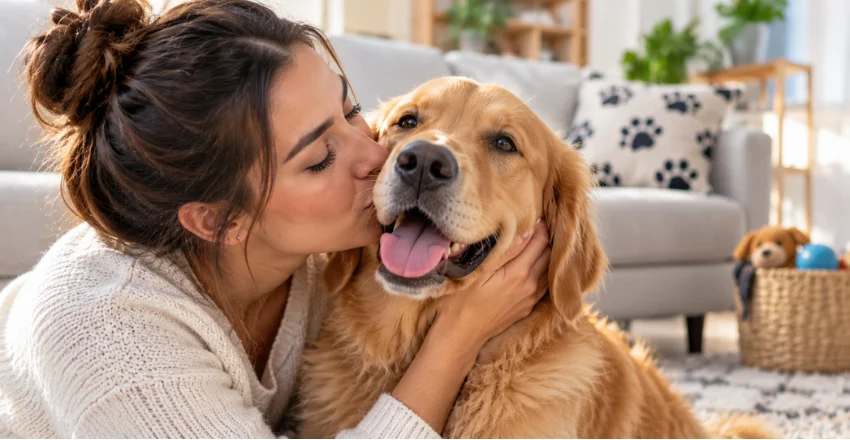
Many dogs appreciate activities that give them choice and predictable rewards. PetMD recommends play, sniffing opportunities, petting, massage, and other dog-friendly interactions. Your individual pet may prefer one form of affection over another.
Useful alternatives include relaxed sniffing walks, favorite games, training exercises, and gentle petting. Food puzzles and calm praise can also create positive shared experiences. A quiet resting place gives your pet another valuable choice.
Training can also improve communication by creating clear, repeatable signals. Short daily sessions give your dog a predictable way to earn praise and attention. For more behavior topics, you can browse the Newsprest Pets section.
If barking or stress complicates affection, address the cause before focusing on correction. Newsprest’s small-dog barking guide discusses reward-based approaches and behavior triggers. A veterinarian or qualified behavior professional can help when fear, pain, or aggression appears.
The Bottom Line
Your dog does not need to understand a human kiss exactly as you do. What matters is whether the interaction predicts safety and feels comfortable to them. Respecting body language makes affection clearer and reduces unnecessary pressure.
Watch what your pet chooses after contact, not only what you intended. If the dog returns, stays loose, and seeks more attention, the ritual may be welcome. If they avoid you, choose another way to connect.
Frequently Asked Questions
Do dogs know what kisses are and mean love?
Not in the human cultural sense. Dogs can learn that kisses predict friendly attention and other positive experiences. Their response depends on history, temperament, health, and the situation.
Why does my dog lick me after I kiss them?
Licking can mean several things, including greeting, attention seeking, exploration, or appeasement. Look for relaxed posture before calling it affection. Repeated lip licking with avoidance may signal discomfort instead.
Is it okay to kiss a dog on the head?
It depends on the individual dog and how they respond. A familiar pet may enjoy brief contact and stay close afterward. Stop if the dog turns away, freezes, stiffens, or leaves.
Do dogs prefer kisses or petting?
No single preference applies to every dog. Many pets find familiar petting easier to interpret than face-to-face contact. Let your dog’s voluntary approach and body language guide the choice.
